




AI tools like Durable, Wix ADI, and Framer promise instant websites, but the real ai website builder disadvantages appear later. Limited customization, weak SEO structure, poor performance control, and scalability issues can hurt long-term growth, making them risky for serious businesses.
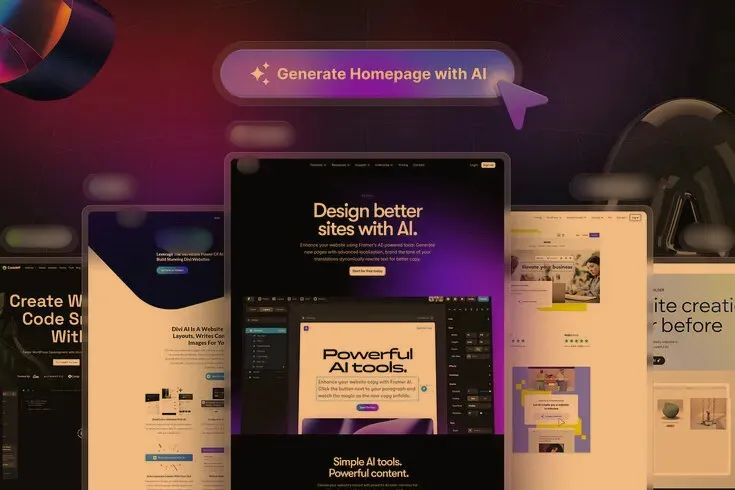
At first glance, this sounds like the dream solution for startups, freelancers, or small businesses wanting a quick online presence. But as convenient as these AI builders seem, there’s a critical truth professionals know well: speed doesn’t equal success.
A website isn’t just code and images it’s a strategic, living digital asset that represents your brand, drives conversions, and builds customer trust. And that’s exactly where AI builders start to fail.
AI-driven website builders have exploded in popularity. In minutes you can have a working website: pages auto-generated, copy drafted, images chosen, and a theme applied. For small teams and busy founders the attraction is obvious low cost, immediate results, and no need for technical staff. But a website is more than a presence; it’s a strategic business asset that supports sales, trust, and long-term growth.
The problem with relying exclusively on AI builders is not that the output is always bad. The problem is that AI-only approaches tend to optimize for patterns and speed rather than for brand distinctiveness, technical robustness, or user psychology. Those are the attributes that make a website work as a growth engine, not just a placeholder.
This article digs into the professional, practical reasons why creating a full website with AI builders is rarely a good idea for companies that want credibility, scale, and measurable ROI.
AI builders choose from design patterns learned from existing sites. The result is often visually tidy but emotionally flat. Brand identity is built from nuance a unique voice, carefully chosen photography, considered typography, and small interaction details that signal quality. Those things are rarely captured by an automated generator.
When dozens of competitors use the same AI tool, many websites begin to look and feel the same. The visitor may immediately understand the service, but they won’t remember the brand, which damages long-term recognition and repeat visits. For businesses selling services or premium products, that lost differentiation translates directly into lower conversion rates and weaker customer loyalty.
AI copywriters can draft grammatically correct paragraphs and helpful outlines, but they lack lived experience and business context. High-value site copy is persuasive: it addresses specific objections, uses social proof in structured ways, and aligns microcopy with conversion triggers (button labels, error messages, form prompts). These conversion levers depend on human insight into customer psychology and A/B tested language.
AI text can also hallucinate details or present vague claims that must be fact-checked. Publishing unverified statements can damage reputation and create legal exposure. In the end, using AI for first drafts is fine but publishing auto-generated copy without human editing is a common source of poor conversion and brand risk.
Search engines evaluate a site on more than keywords: they look at architecture, page load speed, semantic markup, canonicalization, crawlability, and structured data. Many AI builders output bloated markup and inject third-party scripts that slow rendering. They might also limit your ability to control meta-tags at scale, customize schema, or configure server-level caching.



These technical constraints aren’t theoretical they measurably affect discoverability. A site that looks fine may underperform in organic traffic simply because it lacks the technical foundations SEO specialists build by design. Recovering organic traffic after publishing suboptimal pages is time-consuming and costly.
Accessibility (WCAG) and privacy compliance are non-negotiable in many markets. Automated site generators frequently miss critical accessibility needs: incorrect heading hierarchy, missing ARIA attributes, poor focus order, and insufficient color contrast. These omissions not only exclude users with disabilities but can also lead to legal claims in jurisdictions with robust accessibility enforcement.
Privacy policies, cookie consents, and data-handling controls must be precisely implemented and localized. A boilerplate policy generated by an AI tool rarely meets regulatory nuance. Human oversight and legal review are essential, and relying solely on an AI builder can expose a company to avoidable compliance risk.
A risk many teams ignore is ownership. Some AI builders keep content and layouts in proprietary formats that are difficult or impossible to export cleanly. If you ever decide to migrate to a more flexible platform (e.g., WordPress, a headless CMS, or a custom stack), you may find the only practical option is to rebuild the site from scratch.
Platform dependence also creates negotiating power for the vendor. Price increases, feature deprioritization, or service discontinuation can leave a business scrambling. For any company that intends to scale, this type of vendor lock-in is a strategic liability.
AI site builders aim for convenience, so complex security and maintenance workflows are often simplified or opaque. You may have limited control over SSL management, server hardening, access controls, or patch windows. When security vulnerabilities arise, you’re reliant on the vendor’s response timelines.
Similarly, operational needs such as regular backups, staging environments, or continuous integration are often minimal or unavailable in basic AI offerings. For a business that handles customer data, subscriptions, or transactions, these gaps create unacceptable operational risk.

While a cheap AI plan looks economical in month one, costs accumulate: pay for premium features, buy plugins to fill gaps, or spend hours reworking sections that never quite fit your strategy. In many cases, the total cost of ownership over 12–24 months exceeds the price of an initially better-built site.
More importantly, opportunity cost matters. A site that cannot convert, cannot retain users, and cannot rank for competitive terms is losing revenue every day. That lost opportunity compounds over time and often cannot be fixed by incremental edits.
Websites that win combine technical craft with storytelling and user empathy. Human teams bring context: market knowledge, customer interviews, performance data, legal constraints, and a sense of craft. They design flows that reflect real sales cycles and write copy that answers real customer concerns.
AI tools are powerful accelerants for that process but they are not replacements. When humans and AI collaborate, the work becomes faster and more informed. When AI replaces humans entirely, the result is predictably limited.
Below is a single, focused roadmap you can apply immediately to avoid the common pitfalls of AI-only site builds while still capturing AI’s productivity gains:
Use AI for ideation and first drafts, then apply human expertise for brand, UX, and legal review; ensure unique, localized copy and verified facts; enforce a design system and accessibility checklist; own your code and content by using exportable formats; implement a technical SEO audit and performance budget before launch; set up analytics, A/B testing, and an iterative optimization plan; and maintain a documented governance model for security, backups, and vendor contingencies.
AI website builders are a remarkable productivity tool when used with restraint. For prototypes, landing pages, or low-risk experiments they’re invaluable. But for any business seeking growth, differentiation, and resilience, turning over the entire website to an AI builder is a short-sighted decision.
A smarter strategy combines AI speed with human strategy: use automation for repetitive tasks and ideation, and use people for brand strategy, accessibility, SEO, security, and conversion optimization. If you want help evaluating an AI-built site or creating a remediation plan, Aaron Digital Services can run a technical SEO, UX, and compliance audit and deliver a prioritized roadmap to professionalize and future-proof your site.


[…] intelligence has revolutionized the way websites are made and run. Ai website builder myths say they can help you design your site quickly, add content automatically, and set it up without […]
[…] so quickly, many firms now use AI website builders to make sites that are both fast and look good. Is performance under traffic good for sites built by ai builders? This is a typical and essential subject in digital marketing. This subject is important because how […]
[…] Is it evaluate the software company sketch on ai website generator before full development? Many modern businesses use AI tools to quickly assess early-stage concepts, improve design structure, and validate ideas. These platforms provide data-driven insights that help refine strategy, reduce risk, and accelerate the journey from concept to execution […]